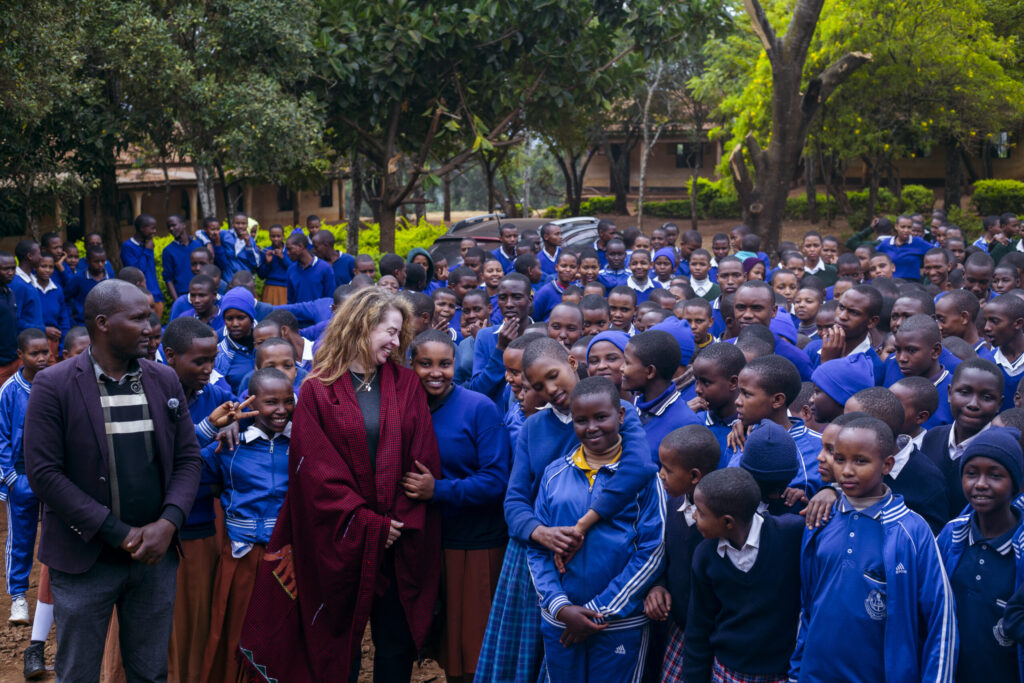
In July, I traveled to Tanzania to visit our projects and work with our local team. Along with three board members from our local partner organization. I visited six schools – Kainam Rhotia, Diego, Oldeani, Qang’dend, Banjika, and Mang’ola Secondary Schools. We also had dinner with twenty teachers and administrators from partner schools. I came home more convinced than ever that this work matters — and more aware than ever of how much is still left to do.
At each school, we visited the head office before touring the computer lab (as is the custom in Tanzania). Unprompted, every head of school immediately began talking for five to ten straight minutes about the many ways the computers have been helping the students, the teachers, and the school administrators.
It was clear that the computer labs are helping in several ways:
1) Student learning and educational outcomes.
2) Teacher and school administration.
3) Student success post-secondary school.
It is also clear that teenagers everywhere love technology. More than one teacher told us that students are more enthusiastic about school and learning when they get to use computers. The students also understand what it means for their future to have access to computers, and they are very excited.
Teachers at every school told us how certain concepts are easier for students to understand when they can watch videos and animations, especially for science subjects. At literally every school, they used volcanoes as an example. Other examples they gave were circulation of blood in the human body, organs of the body, and various physics concepts.
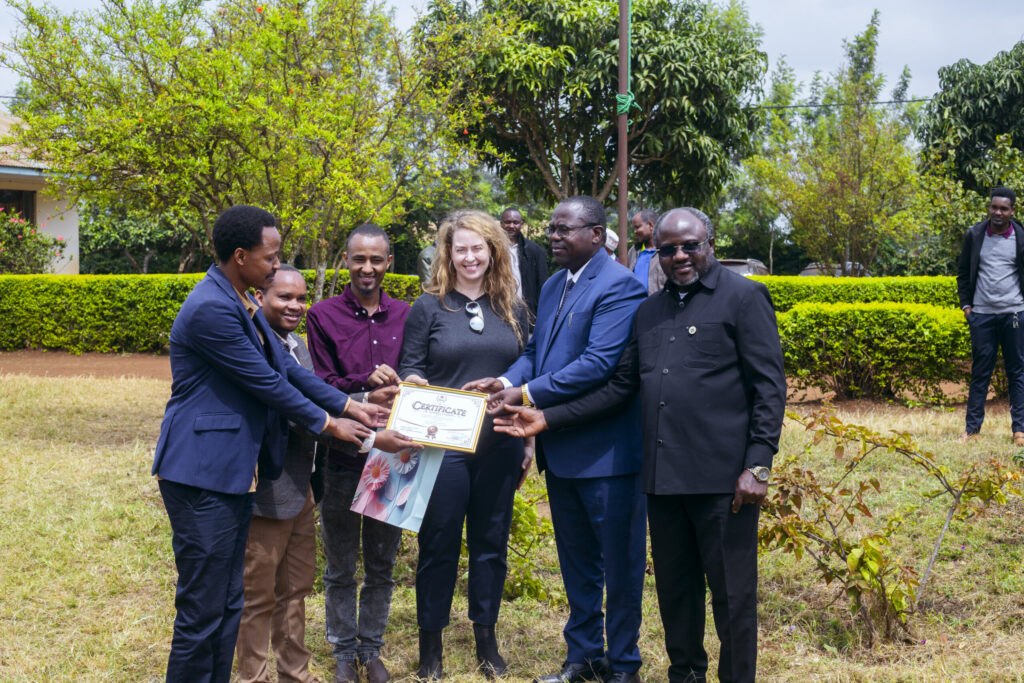
Each school had a large celebration for our visit. They presented us with gifts and certificates of appreciation, held assemblies of the entire school where we all addressed the students, and presented formal demonstrations of ways the students are using the computers. Kainam Rhotia planted a tree to mark the occasion. At Banjika, the students had built websites about Powering Potential, and showed us as they changed the code to turn the background from green to pink to cyan.
These celebrations were very moving, but more importantly it showed us how grateful the schools are for the computer labs. In Tanzanian culture, one of the highest values is reciprocity. They feel like we have given them something special and meaningful, so they wanted to give us something special and meaningful in return.
The stories that stayed with me
Kainam Rhotia is one of our newest schools, and clearly one of our most under-resourced. There are no dormitories, so students sleep on mats on classroom floors, and some walk up to six kilometers each way to get to school.
Despite these challenges, they are one our most dedicated and enthusiastic partners. The head of school found out about our program and reached out to PEF Executive Direct Albin Mathias to request a computer lab, only to learn his school was already on our list. When we told them that they could get a lab as soon as they were ready with tables, chairs, and a secure classroom, they were ready within two weeks.
Diego, where we installed a lab in 2025, has a lab manager so motivated he was visibly disappointed we didn’t have more time for him to show us everything his students are learning on the computers.
Oldeani has the nicest facilities of any school we work with. They also found their own funding for internet access. The school is co-run by Tanzanian Children’s Fund, an American non-profit with deep roots in the Rift Valley. The clear difference between Oldeani and our other partner schools is an important reminder of how much further we can go through partnerships with other organizations already active on the ground. I left Oldeani determined to find more NGO partners that can help us bring even more resources to our students.
Banjika was our very first partner school, and it felt very special to continue our relationship with the school that started it all. We upgraded their lab with ten new computers in 2025. They told us about students who had used the computers to study for their exams, and are now studying medicine at university. One girl was accepted to a special IT academy in Arusha and is now studying advanced digital technology, such as AI and drones.
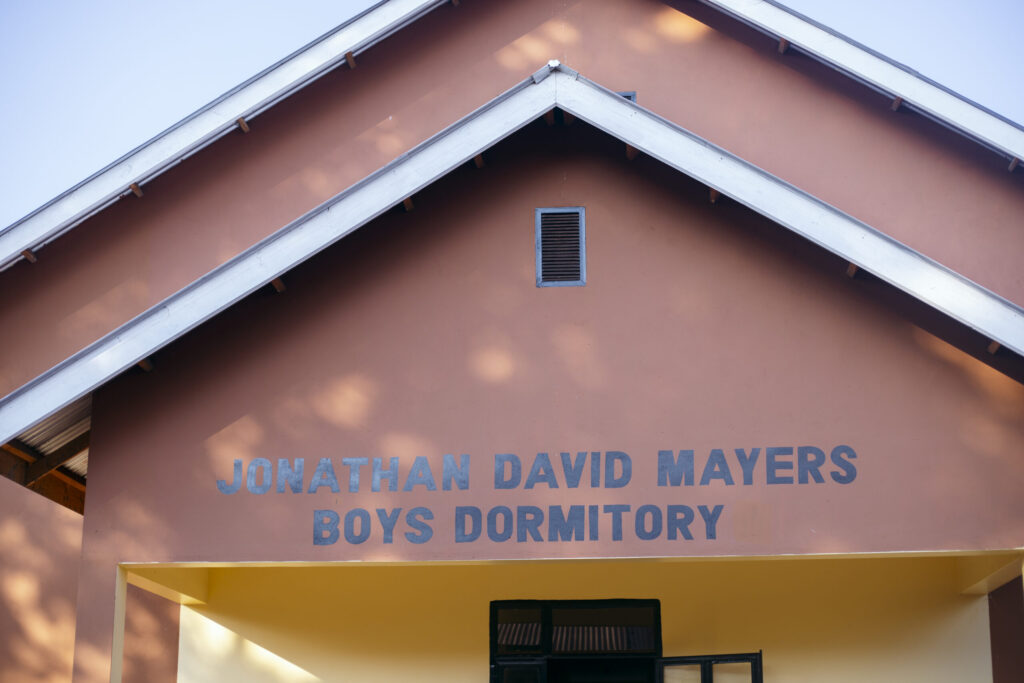
At Banjika, we also toured a new dormitory that was funded by IMPACT People Alliance, for whom we served as a fiscal sponsor. It was built in memory of Victoria Mayers’ son, Jonathan David Mayers, who died of cancer in his thirties. It is a beautiful building and it was moving to see it completed.
Newer schools, same spirit
Getting two of our newest schools – Mang’ola and Qang’dend – required renting a 4×4 vehicle to navigate the rough roads.
As we approached Qang’dend, a stark reminder of their challenges was immediately obvious. One building sits empty because strong winds tore the roof off, and the school lacks the funds to replace it.
Despite these harsh realities, the head of school was bursting with excitement over their new technology. Computers are completely changing how they plan lessons and manage the school. For example, by switching from paper to digital spreadsheets, they can instantly spot when a student is frequently absent and at risk of dropping out. This data allows them to contact parents directly, step in with targeted help, and ensure those children can return to the classroom.
At Mang’ola, our newest partner school, the lab had been installed that very morning. The power was out, and every computer ran perfectly anyway – powered by the sun. We got to watch the students use the computers for the very first time. They practically sprinted to the keyboards.
The number that stuck with me the most
The lab manager from Milimani Sumawe had already told us that within a year and a half of getting a solar-powered lab, with no internet at all, they completely eliminated “Divison Zero”, the lowest failing exam category. (Students in Division Zero do not qualify to earn a secondary school degree.) That night he shared that their school used to rank last out of roughly 30 schools in the district. After receiving their computer lab, they climbed to the top ten.
At dinner with about twenty teachers and administrators (many of whom traveled hours on a motorcycle taxi, on bumpy dirt roads, in the cold, just to be there), we got to hear from schools we did not have time to visit.
More work ahead
All of these schools are doing a lot with a little. They are in difficult environments, and life can be very hard. At many schools, students choose to sleep in classrooms at night rather than walk an hour or more to and from school every day. They continue to have a shortage of teachers.
Although there is real work still ahead of us, I came home certain of one thing: Our donors are helping people.
Kids are doing better in school because of these computer labs. The teachers are passionate, and the students are hungry to learn. They are turning these resources into further education, more stable jobs, and better-paying jobs than they had access to before.
What we’re building here works, and it’s worth finishing.
— Caitlin Kelley, Executive Director




No comment yet, add your voice below!